
Airless pump bottles utilize a rising piston mechanism to dispense skincare and cosmetic formulations without the need for a traditional dip tube. This design minimizes air exposure, delivers consistent product dispensing, and maximizes product evacuation, making airless pump bottles an ideal packaging solution for modern beauty and personal care brands.
This guide provides an in-depth look at how airless pump bottles work, the key advantages they offer over traditional packaging, and important considerations for the filling process.
How Airless Pump Bottles Work: The 3-Part Mechanism Explained
To understand how airless pump bottles work, it is helpful to examine the three primary components that drive the vacuum system and the operating mechanism behind them:
1. Core Structure
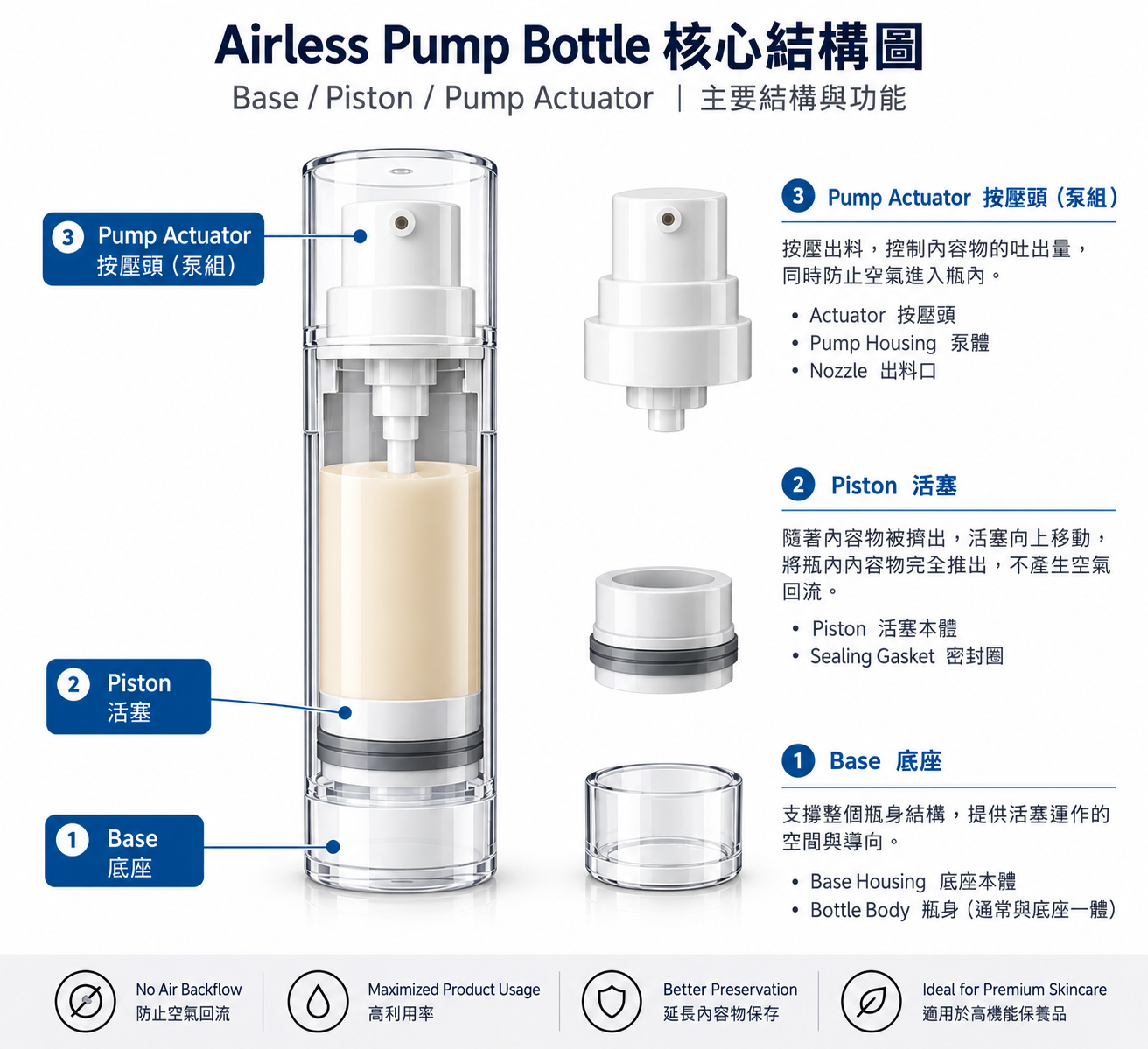
- Base: Contains an air vent that allows outside air to enter the space beneath the piston. If this opening becomes blocked, the piston may not rise properly.
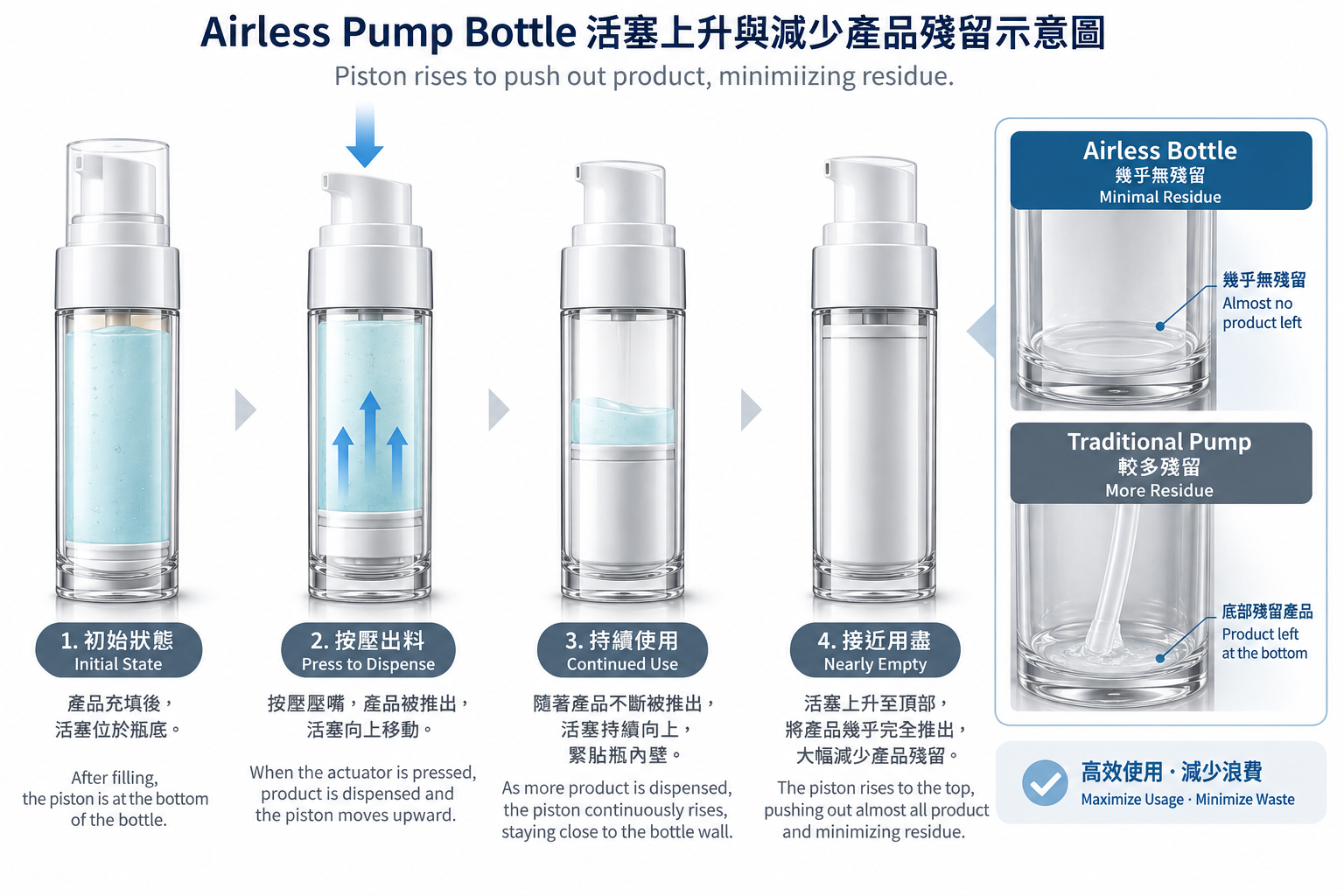
- Piston / Disc: Moves upward as the product is dispensed, which keeps the remaining formula close to the pump inlet and helps reduce residue inside the bottle.
- Pump Actuator: The component pressed by the user. Its internal chamber and valves draw in the formula, control the dose, and dispense it through the nozzle.
2. Operating Mechanism
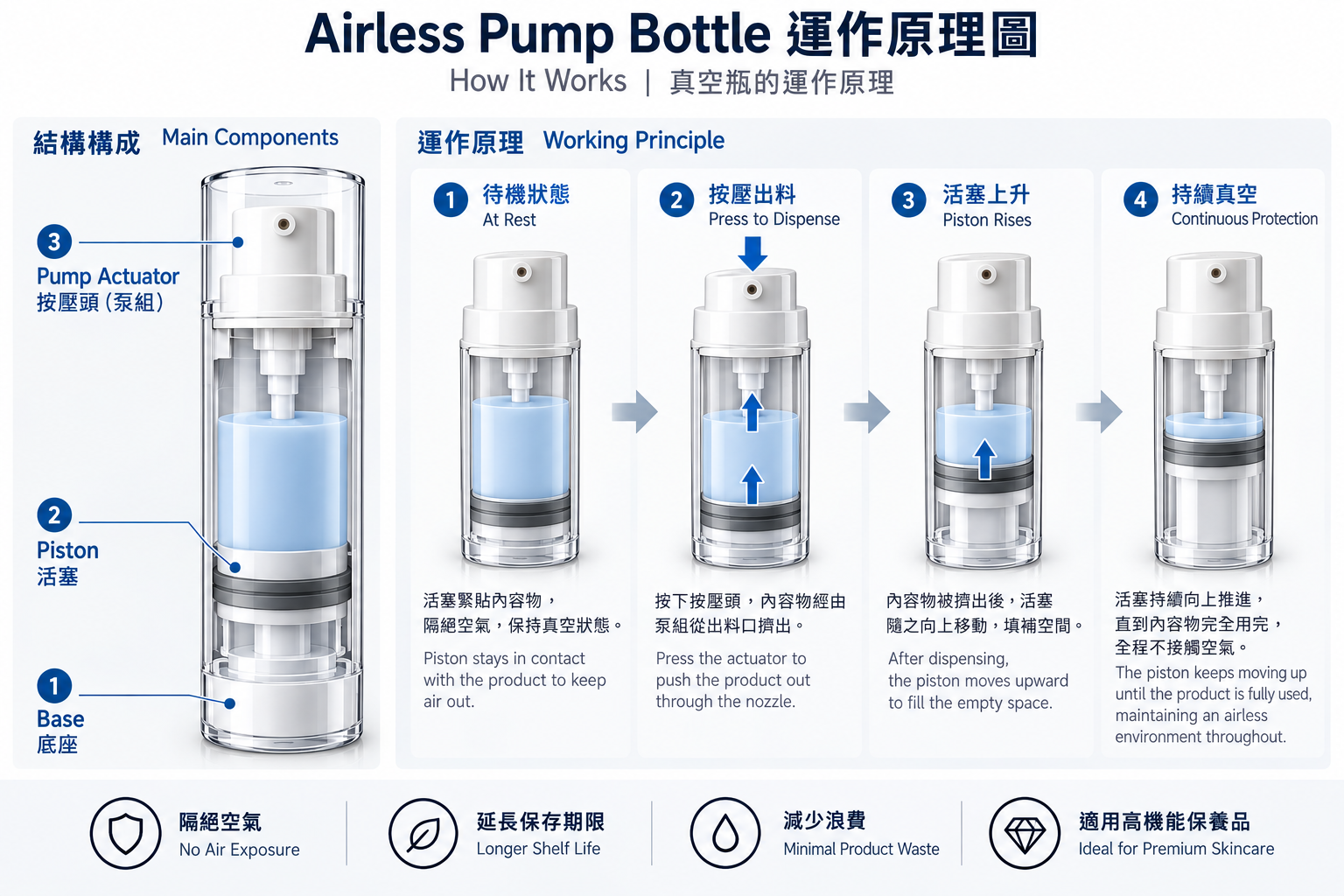
- Actuation and Dispensing: Pressing the actuator compresses the pump chamber, dispensing a measured dose of product through the nozzle.
- Product Refill: As the actuator returns to its original position, negative pressure draws the next dose of formula into the pump chamber.
- Piston Movement: As product is dispensed, outside air enters through the base vent beneath the piston, causing the piston to rise and continuously push the remaining formula toward the pump inlet.
- Reduced Air Exposure: The rising piston keeps the formula separated from outside air, helping protect sensitive ingredients, minimize oxidation, and maximize product evacuation.
🔗 Further Reading: Brand New Lotion Pump Not Working? 4 Expert Fixes & Solutions
Why Brands Switch: Airless Pump Bottles vs. Traditional Pumps
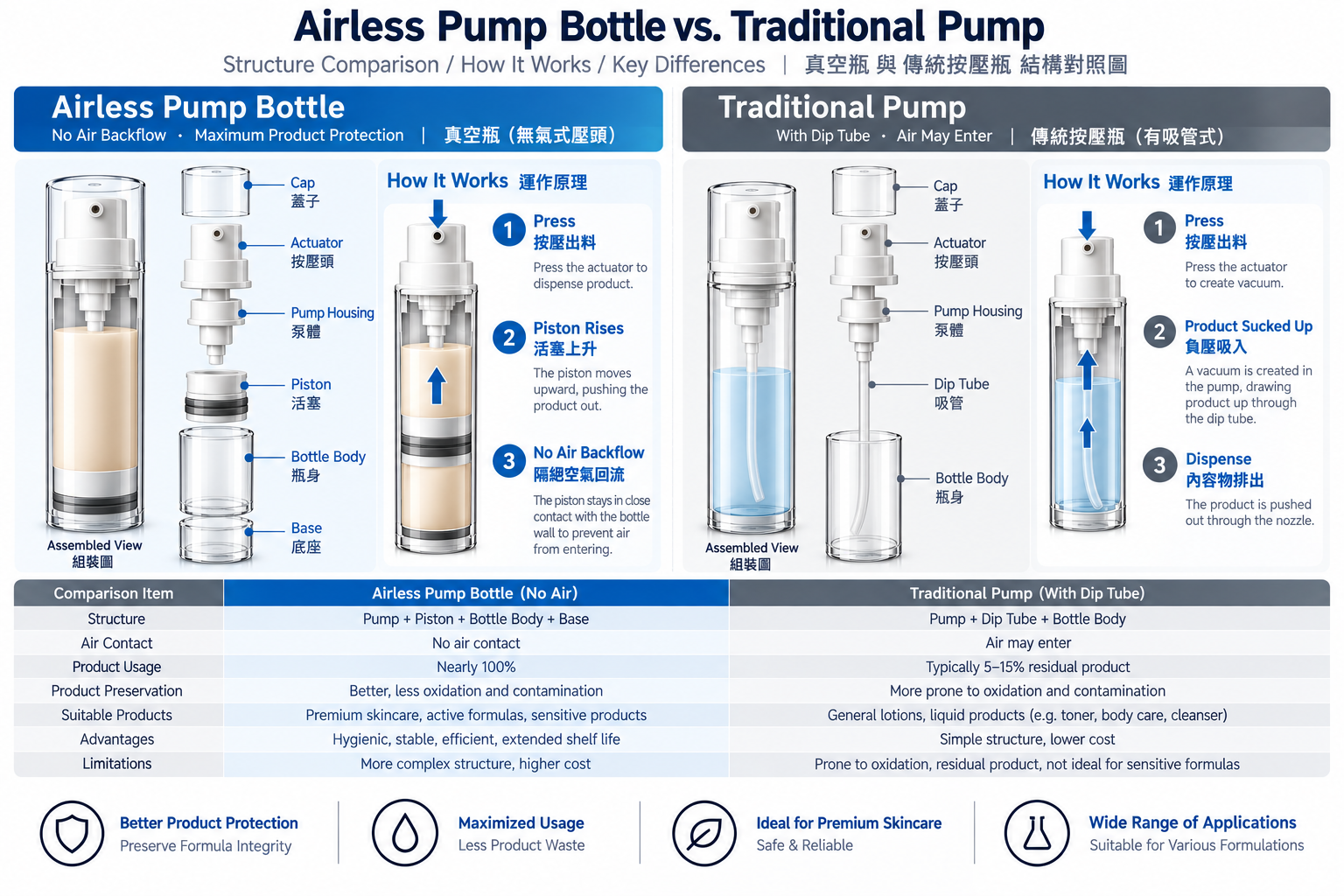
Traditional pumps use a dip tube and let air enter the container. Airless pump bottles use a piston system for better formula protection, dispensing, and product evacuation.
- Reduced Oxidation Risk: By limiting contact between the formula and outside air, airless packaging helps reduce the risk of oxidation and better protects oxygen-sensitive ingredients.
- Consistent Dispensing: When properly matched with the formula, an airless pump delivers a controlled, consistent dose from the first use to the last.
- Maximized Product Utilization: The rising piston continuously pushes the formula toward the pump, helping maximize product evacuation and minimize residue left inside the container.
- Fewer Customer Complaints: When the packaging system is properly designed and validated, it can help reduce issues such as leakage, product buildup around the nozzle, inconsistent dispensing, and formula discoloration.
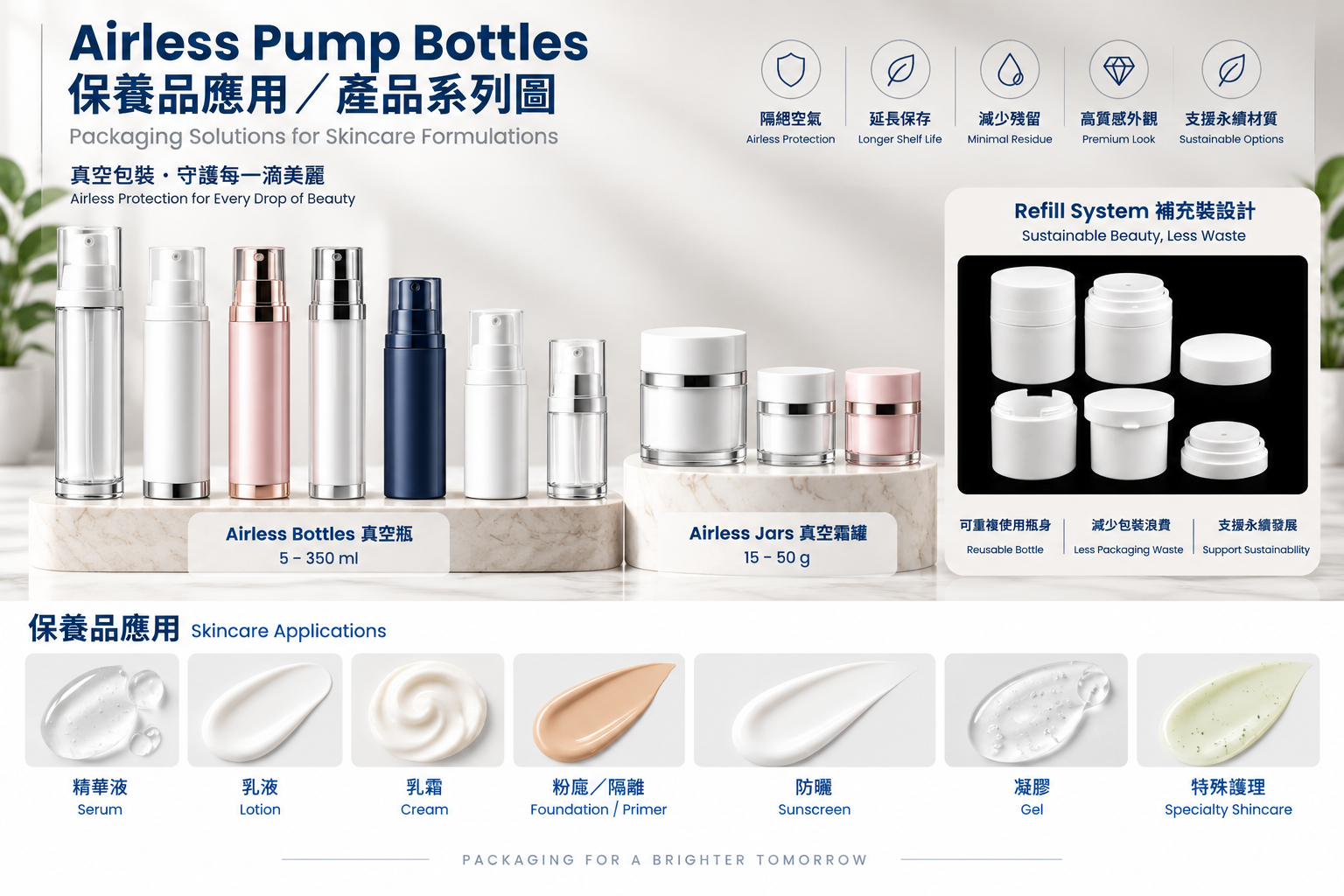
- Ideal Applications: Airless packaging is an excellent choice for premium skincare products, active formulations, serums, creams, and other high-viscosity products that require precise, hygienic dispensing.
| Feature | Airless Pump Bottles | Traditional Pumps |
|---|---|---|
| Air Exposure | Minimized (vacuum system) | High (dip tube allows air entry) |
| Formula Protection | High (prevents oxidation) | Low (potential for oxidation) |
| Dispensing Consistency | High (uniform dose) | Variable |
| Product Utilization | High (rising piston reduces residue) | Lower (residue often remains) |
| Ideal For | Premium skincare, active treatments | General applications |
🔗 Further Reading: Airless Pumps for Cosmetics: Everything Brands Need to Know
Key Considerations for Filling Airless Pump Bottles
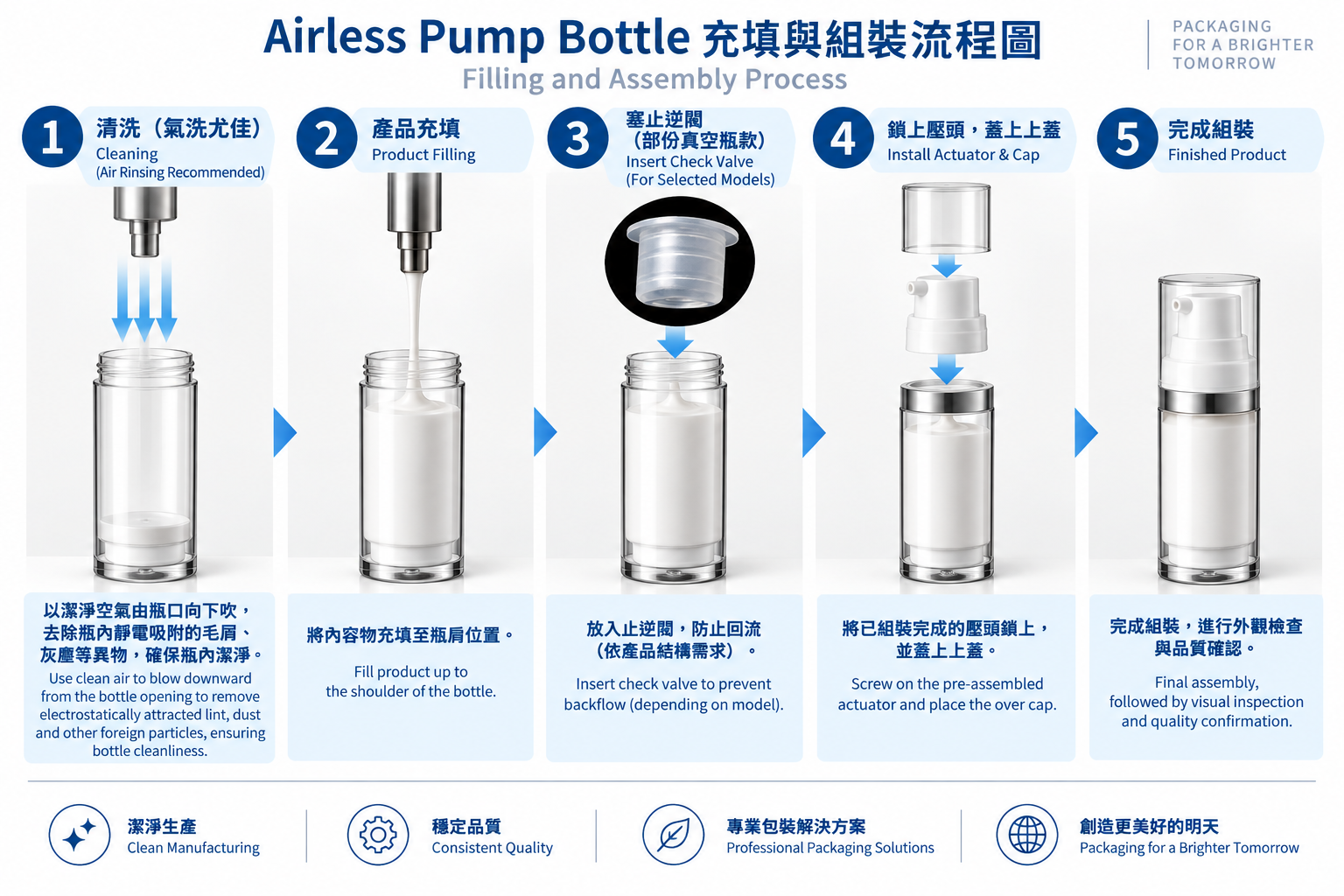
Proper filling is essential for reliable dispensing performance. Before production begins, brands should review the following factors with their packaging supplier and filling partner.
1. Top-Fill Assembly
Most airless pump bottles are designed for top filling, where the formula is filled through the bottle neck before the pump is assembled. Following the recommended filling and assembly process helps ensure proper pump performance and product protection.
2. Eliminating Air Bubbles
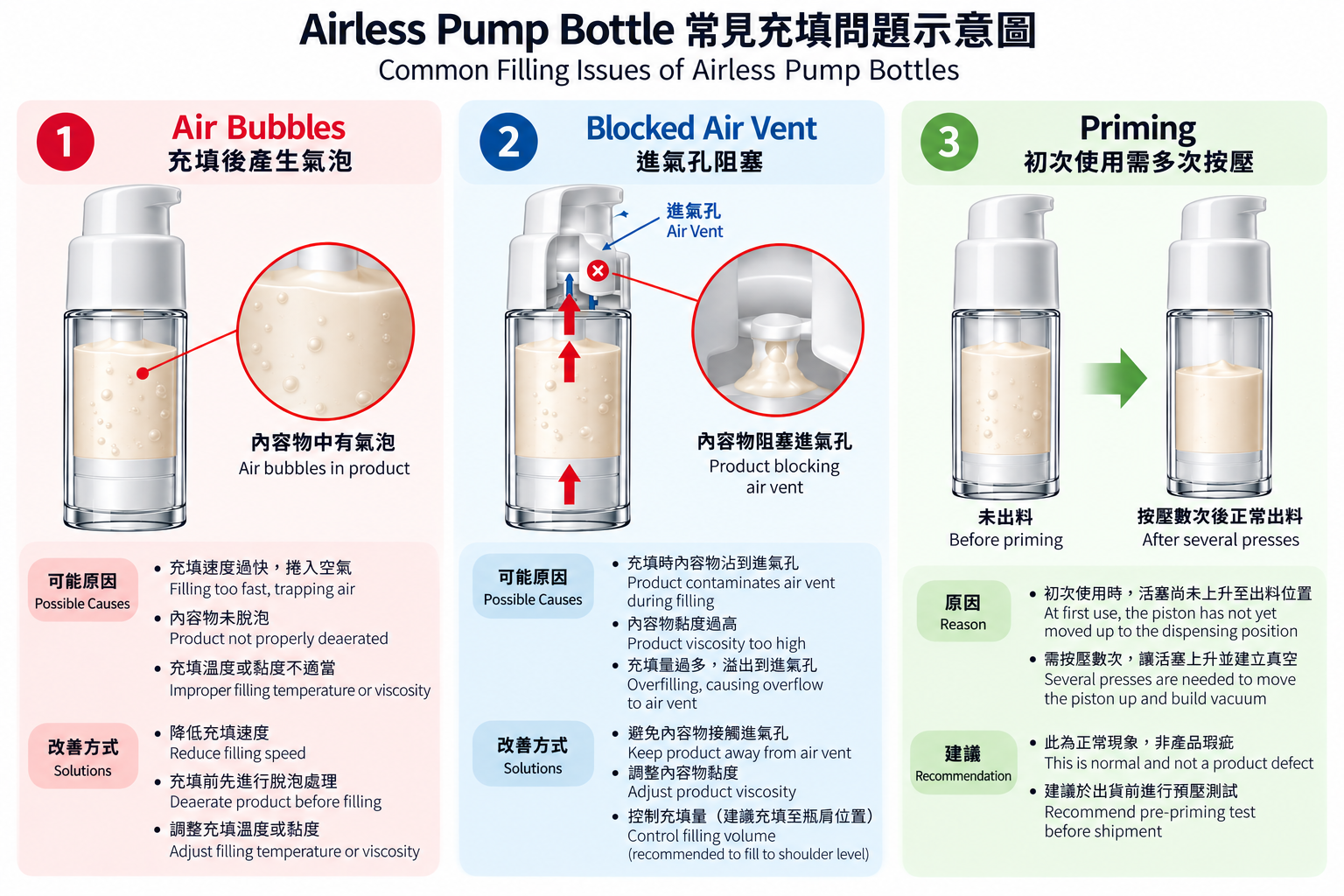
Trapped air can delay pump priming or disrupt product flow. Filling speed, nozzle depth, and formula viscosity should be evaluated to minimize air entrapment.
3. Keeping the Air Vent Clear
The air vent in the base allows air to enter beneath the piston as the product is dispensed. If the vent becomes blocked by product residue or improper assembly, piston movement and dispensing performance may be affected.
4. Priming the Pump
Several initial presses may be required to draw the formula into the pump chamber. The number of priming strokes depends on the pump design and formula characteristics and should be verified during compatibility testing.
🔗 Further Reading: Continuous Spray Bottle Not Working? Causes & Prevention Guide
Partner with an Expert Airless Pump Manufacturer: CHUN JING (SUNRISE PUMPS)
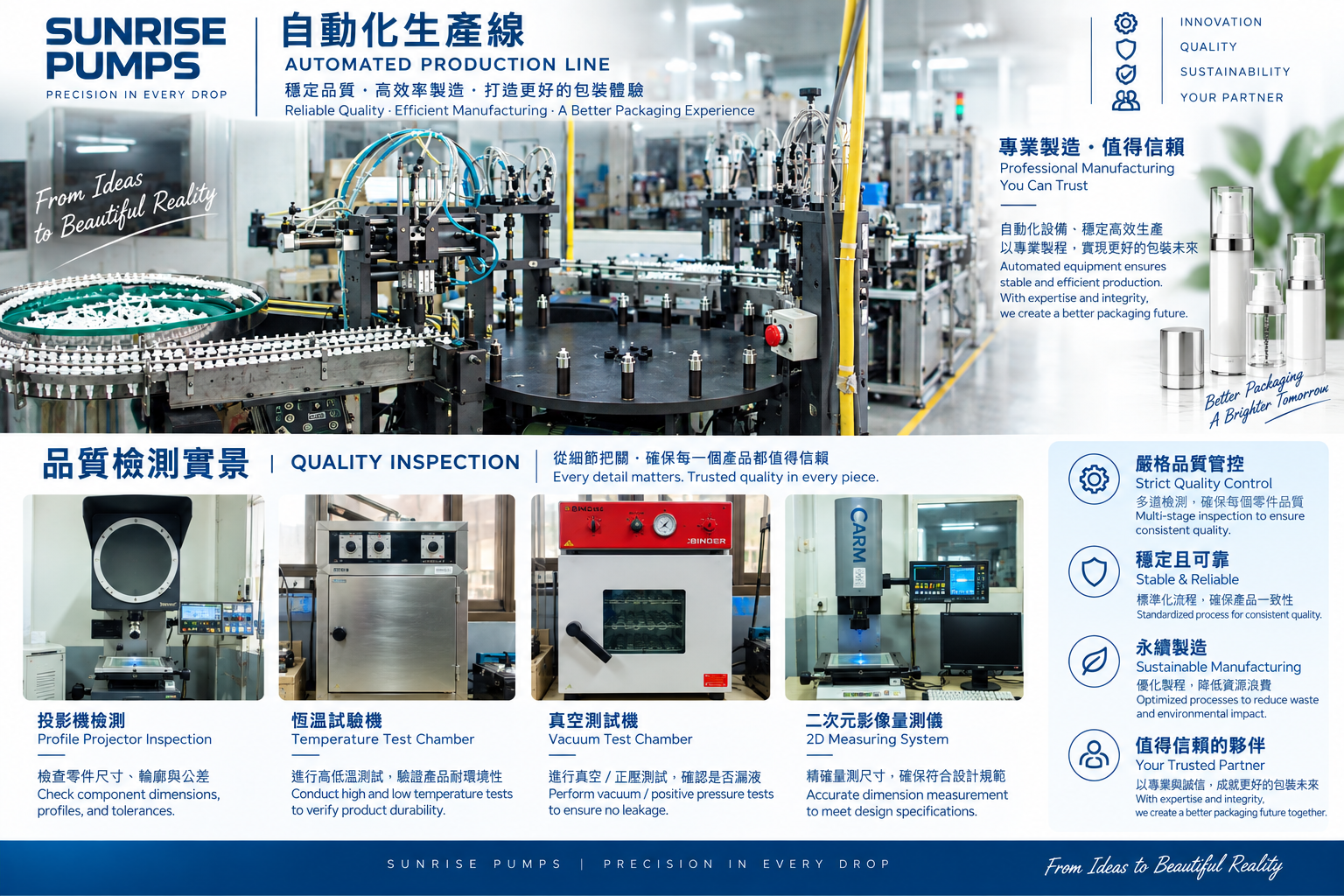
Looking for the right airless packaging solution? Contact CHUN JING (SUNRISE PUMPS) to discuss your project. Our team can help you select the right airless pump, validate formula compatibility, and support your packaging development from concept to production.
FAQs
Q. What is the difference between inner spring and outer spring in airless pumps?
An inner-spring pump positions the metal spring inside the product chamber, allowing it to come into contact with the formula.
By contrast, an outer-spring pump isolates the spring from the product path, helping reduce the risk of metal contact, improve formula compatibility, and better protect sensitive cosmetic formulations.
Q. What products are best suited for airless pump bottles?
Airless pump bottles are ideal for premium skincare, active serums, and other formulations that benefit from reduced air exposure and precise, controlled dispensing.
Q. Why is my airless pump not dispensing product?
A new airless pump may require several initial presses to prime the pump chamber. If the product still does not dispense, possible causes include trapped air, a blocked base vent, improper filling or assembly, insufficient product flow, or a formula viscosity that is not compatible with the pump design.