
Airless pumps do more than simply dispense a formula. They help protect product quality, minimize product waste, and shape consumers' perception of a brand. That's why airless pumps for cosmetics have become a preferred packaging solution for skincare and beauty products.
But what is an airless pump, how does it work, and how does it differ from a traditional lotion pump? More importantly, what should brands consider when choosing an airless pump supplier? This guide covers everything you need to know.
What Are Airless Pumps for Cosmetics?
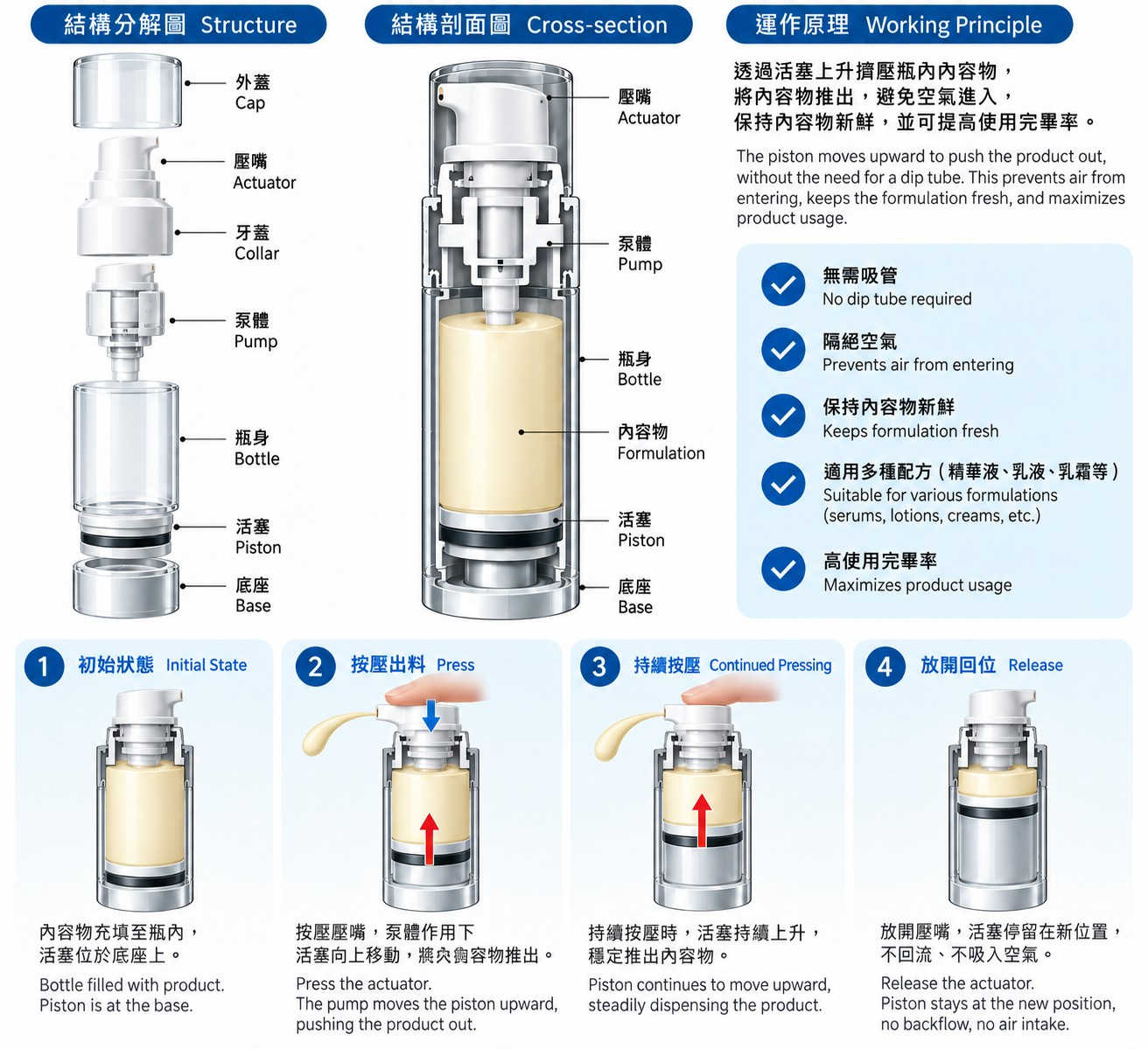
An airless pump is a dispensing system designed to deliver cosmetic formulas without using a traditional dip tube. Instead, it uses an internal piston or collapsible pouch to push the product upward as it is dispensed, helping minimize air exposure throughout use.
When the actuator is pressed, the pump dispenses a measured amount of product while the internal piston rises (or the inner pouch contracts) to move the remaining formula toward the outlet. Because outside air is not drawn back into the container after each use, the product remains better protected from oxidation and external contamination.
By comparison, a traditional pump relies on a dip tube and allows air to enter the container as product is dispensed. This increases the risk of oxidation, may shorten the stability of sensitive formulations, and often leaves more product trapped at the bottom of the bottle, resulting in unnecessary waste.
| Feature | Traditional Pump | Airless Pump |
|---|---|---|
| Air Exposure | High (air enters container) | Near-Zero (enclosed system) |
| Product Residue | Significant amount remains | Minimal (near-total evacuation) |
| Hygiene | Moderate risk of contamination | Superior protection |
| Viscosity Compatibility | Limited to thinner liquids | Works with high-viscosity creams |
| Shelf Life Preservation | Standard | Extended for active ingredients |
🔗 Further Reading: Hand Cream Tube Packaging
Key Benefits of Using Airless Pumps for Cosmetic Packaging
Here are four key benefits that make this packaging solution an essential investment:
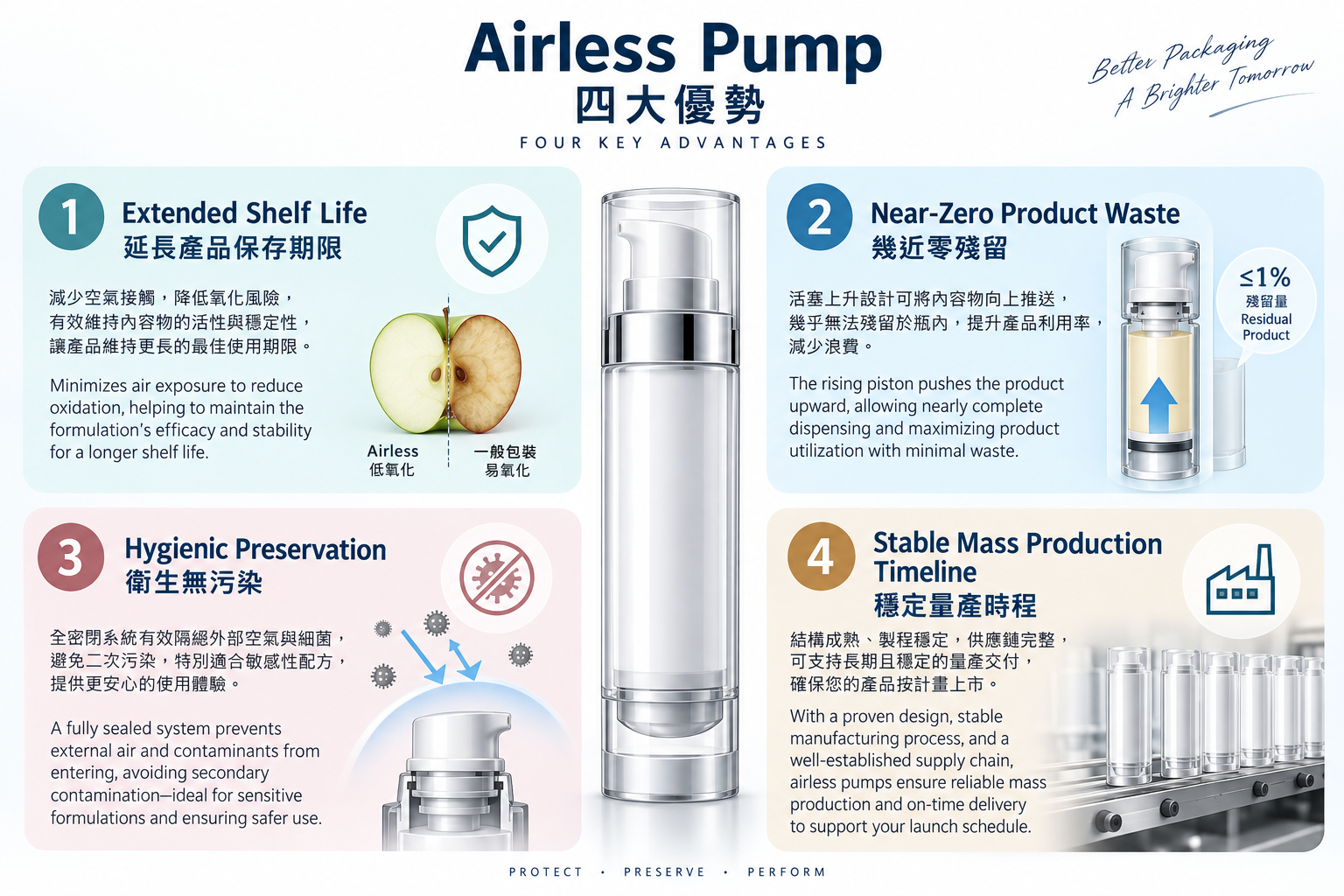
1. Extended Shelf Life
Cosmetic formulas containing vitamins, peptides, botanical extracts, retinol, or other active ingredients may be sensitive to repeated air exposure. Airless packaging creates an enclosed environment, limiting air contact and preserving the formula from the first use to the last.
2. Near-Zero Product Waste
As the internal disc rises, airless pumps for cosmetics scrape the inside walls, directing the remaining product toward the pump. This ensures consumers can access nearly all of the product, preventing waste at the bottom or sides of the container.
3. Hygienic Preservation
Airless pumps eliminate the risk of contamination by keeping the formula enclosed. Consumers receive a controlled dose without ever touching the remaining product, drastically reducing exposure to dust, moisture, and bacteria.
4. Stable Mass Production Timeline
A well-designed product helps brands maintain their filling and launch schedules. High-quality packaging mitigates the risk of product leakage and customer complaints, supporting a stable supply chain and bolstering market competitiveness.
Types of Airless Packaging: Bottles, Jars, and Tubes Explained
Airless technology is available in several formats. The right option depends on the formula’s viscosity, required dosage, application method, brand positioning, and filling process.
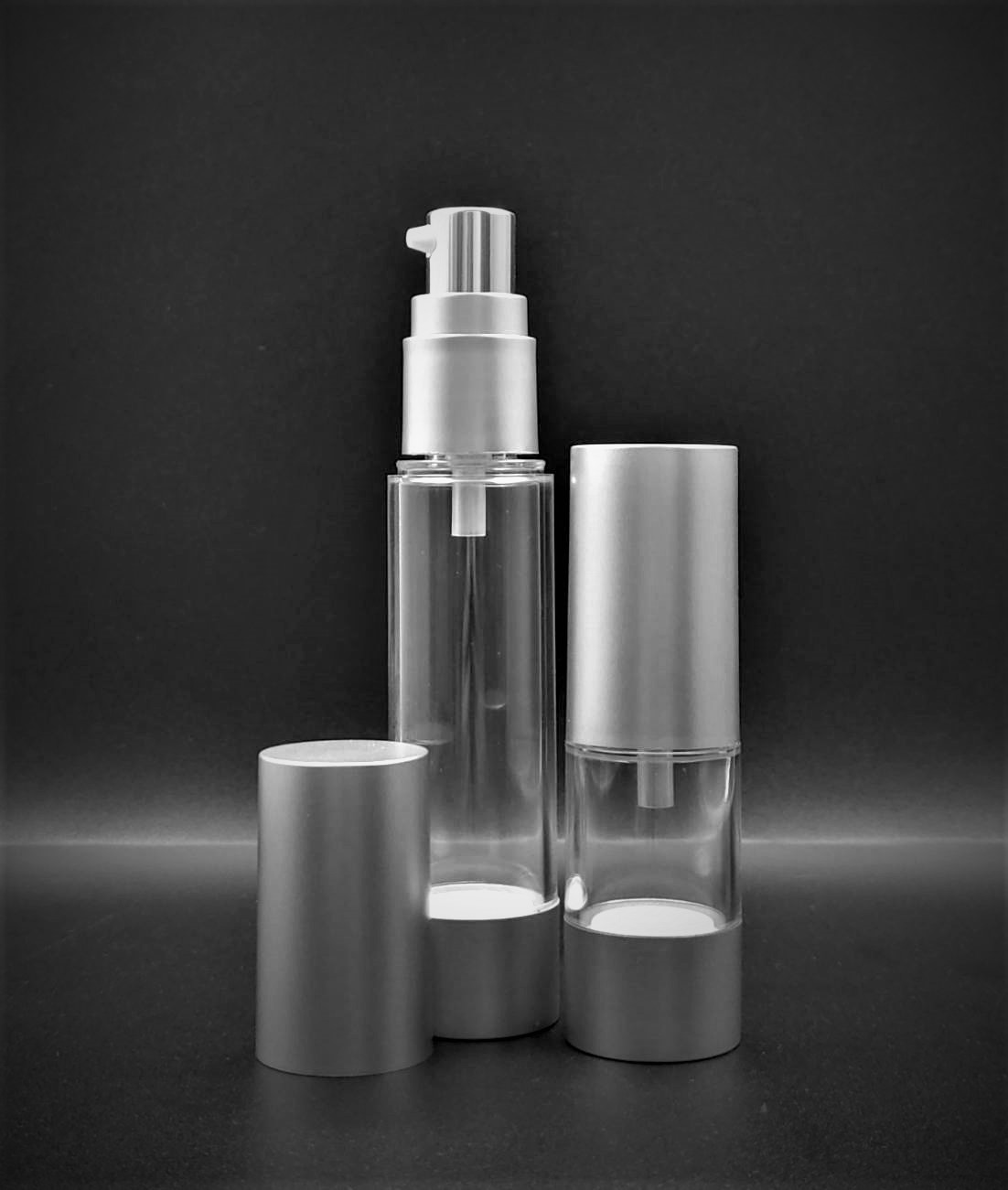
1. Airless Pump Bottles
2. Airless Jars
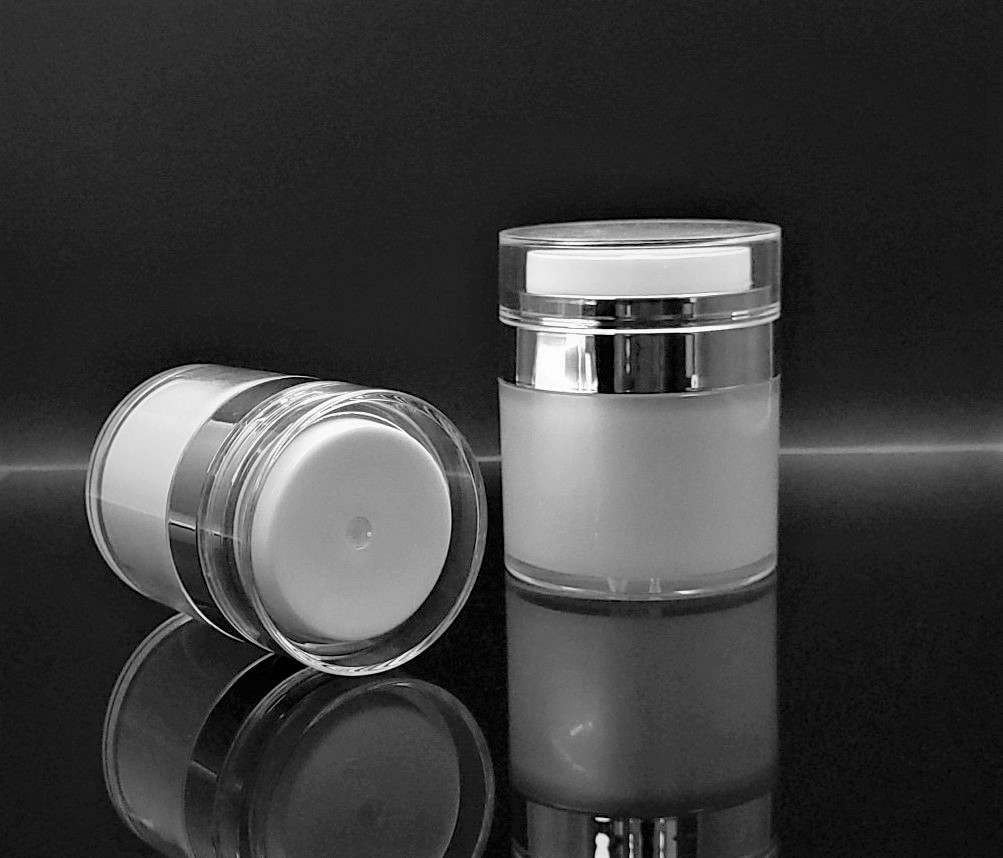
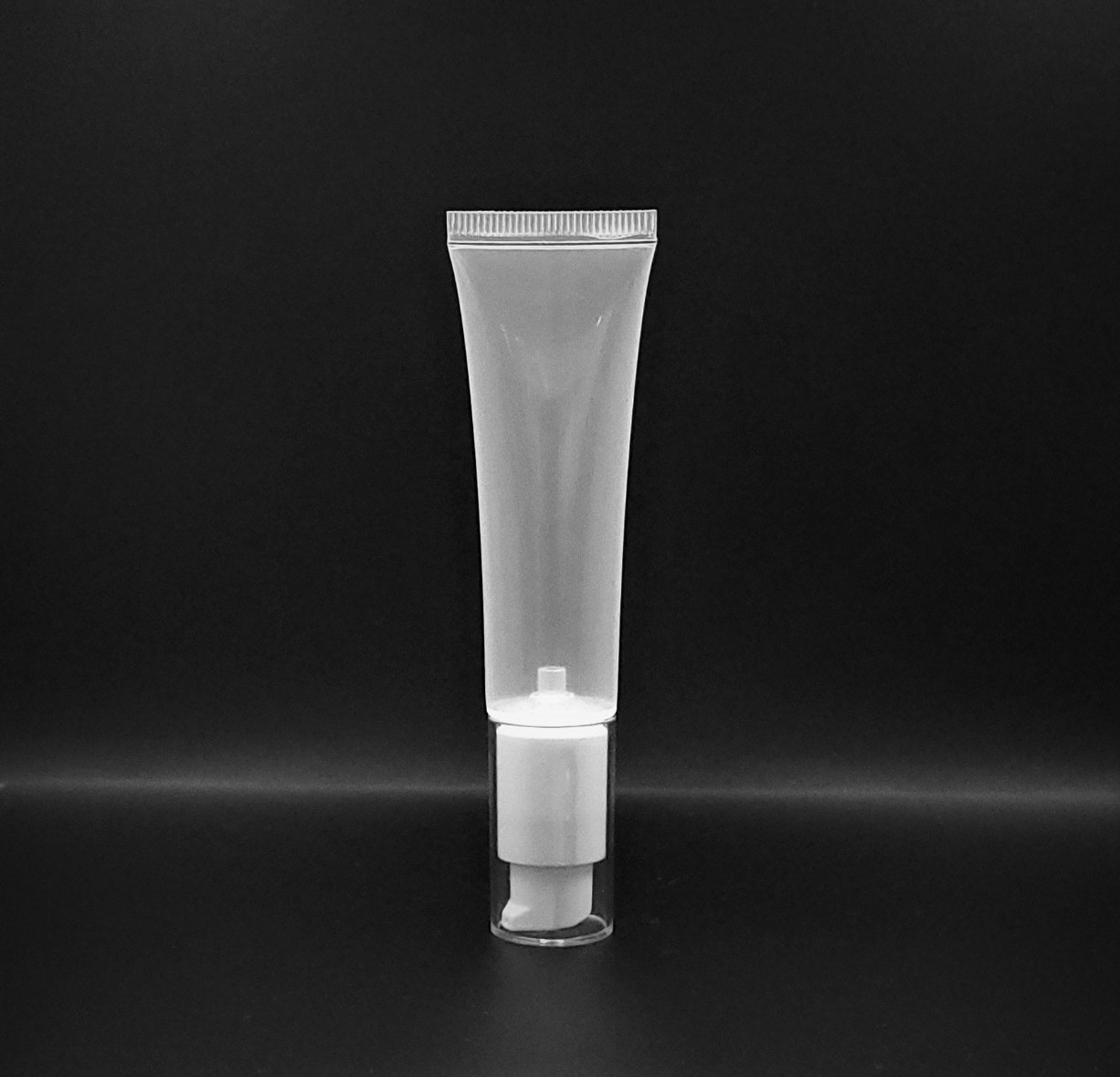
3. Airless Tubes
🔗 Further Reading: Continuous Spray Bottle Not Working? Causes & Prevention Guide
How to Choose a Reliable Airless Pump Manufacturer for Your Cosmetic Brand
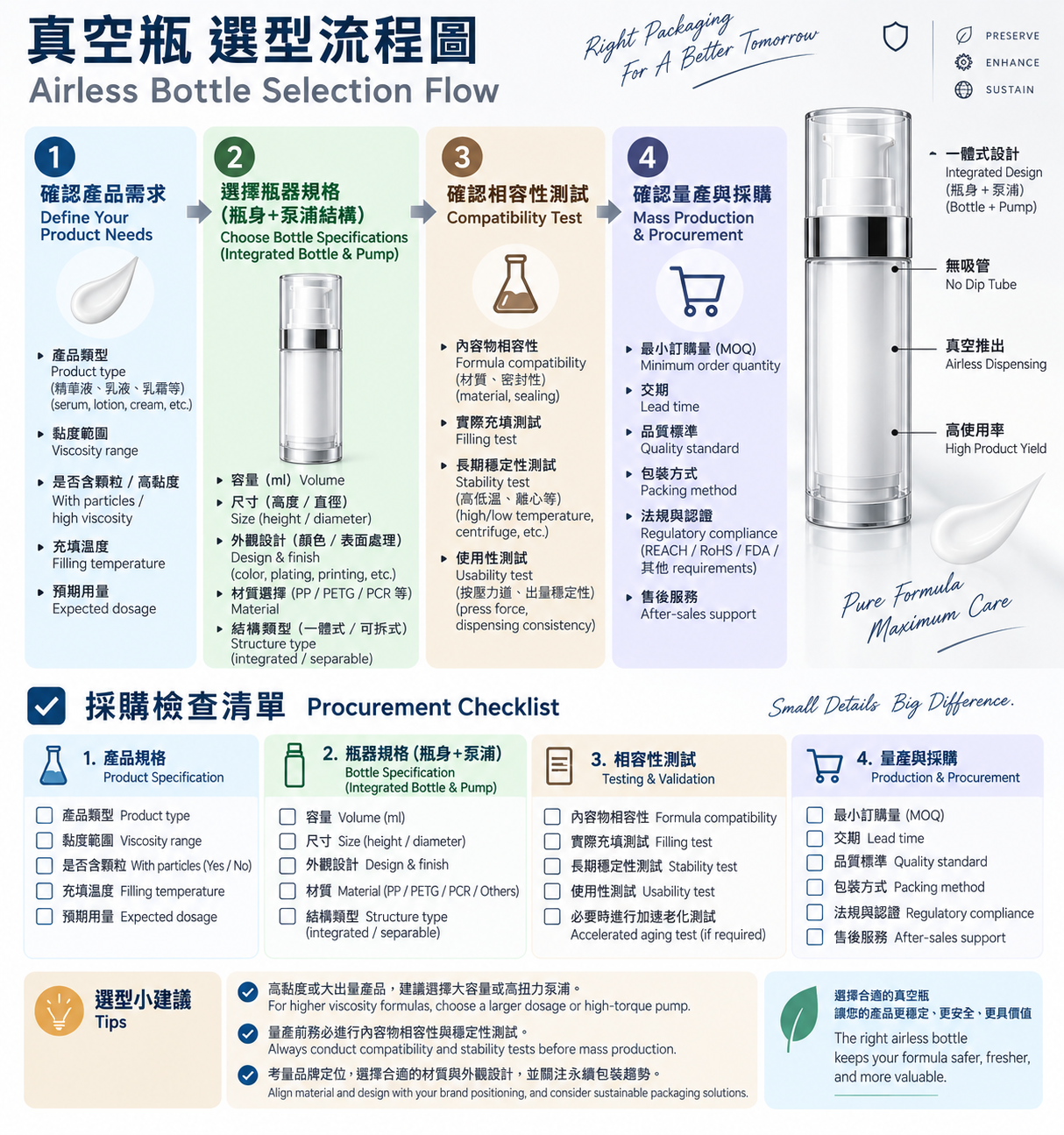
Selecting a trusted supplier requires evaluating their capabilities across several critical metrics.
1. Quality Control & Testing
An airless package has multiple components that must function together flawlessly. A dependable manufacturer will conduct rigorous testing on raw materials, leakage, pump output consistency, and drop resistance.
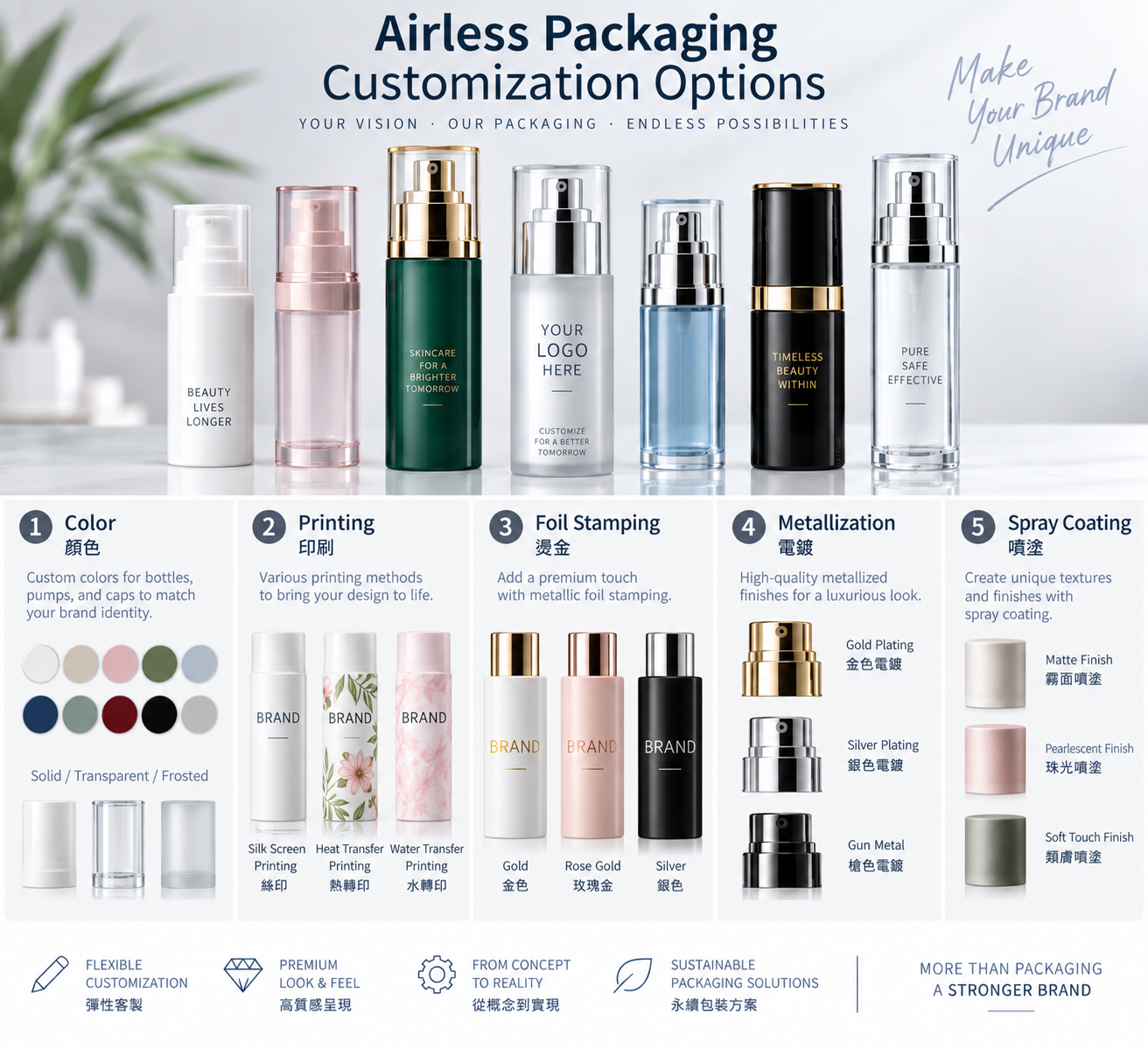
2. Customization Capabilities
Packaging must align with both formula requirements and brand identity. Look for a supplier that offers extensive customization, including custom colors, varied pump outputs, logo printing, hot stamping, metallization, and custom mold development.
3. Certifications
To guarantee strict manufacturing standards, brands should verify the supplier's credentials. Reliable partners will maintain ISO quality management certifications and provide necessary documentation, such as Product Information Files (PIF) and material safety declarations.
4. Lead Times & Supply Chain Stability
Brands must partner with a manufacturer that possesses stable automated production lines and clear lead-time management to coordinate seamlessly with formula filling and launch schedules.
🔗 Further Reading:
Why CHUN JING ENTERPRISE (SUNRISE PUMPS) Is Your Ideal Partner
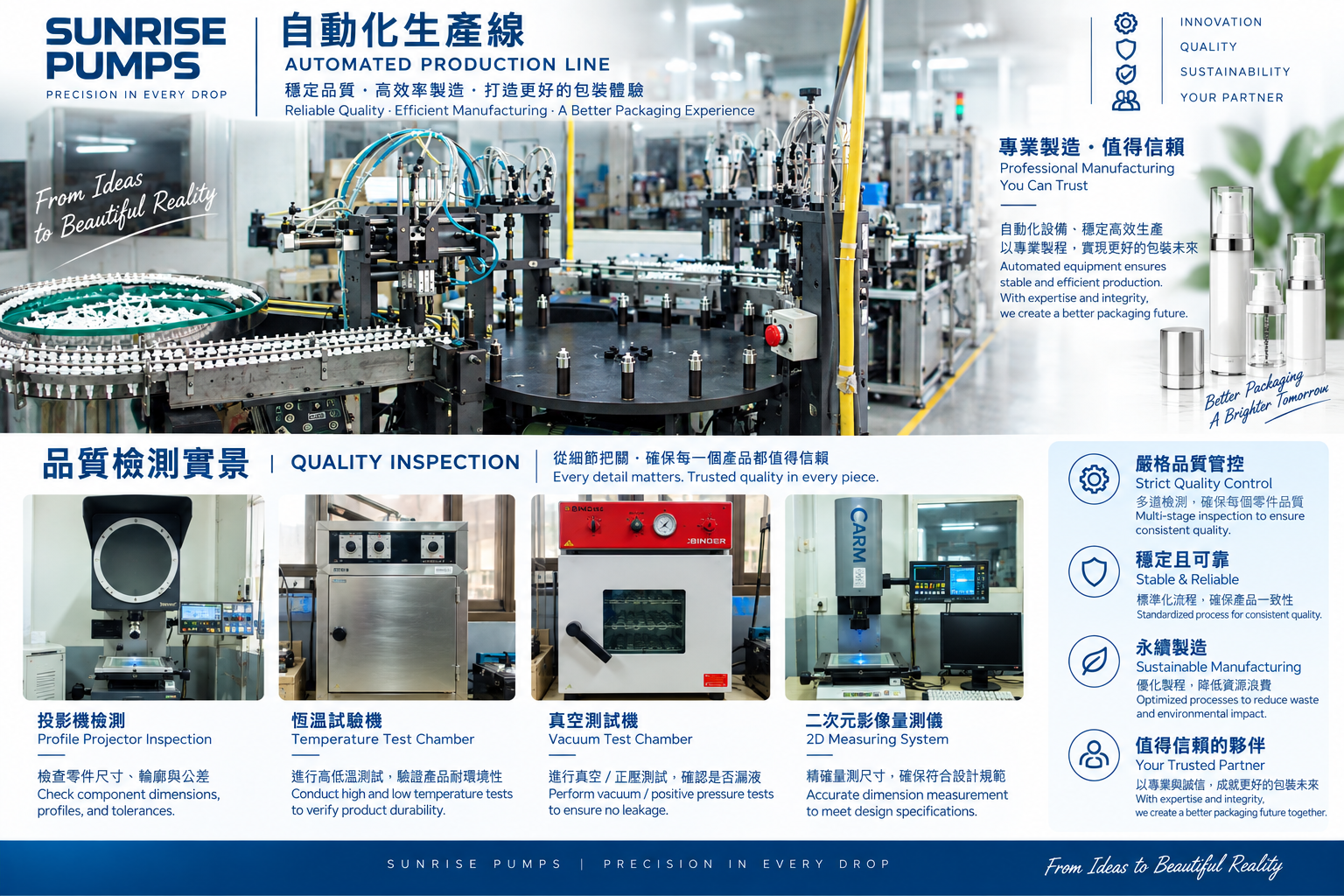
Founded in 1979, CHUN JING (SUNRISE PUMPS) boasts nearly 50 years of professional experience as a pump packaging manufacturer based in Taiwan.
Utilizing proprietary automated factories, the company has an established track record of serving major international brands, including P&G, J&J, Unilever, and Colgate.
SUNRISE PUMPS offers full support for OEM/ODM comprehensive project planning and provides 5 major advantages for cosmetic brands:
- Stable Quality: Strict ISO-certified quality control, and an automated production line.
- Flexible Customization: Support highly customizable options, including package size, pump output, component colors, and custom mold development.
- Lead Time Management: Ensure stable mass production and delivery timelines.
- Technical Expertise: The technical team expertly matches pump structures, dosages, and materials to your specific formula viscosities.
- Long-term Partnership: From packaging selection and sampling to testing coordination and after-sales functional guarantees.
Ready to elevate your cosmetic packaging? Contact SUNRISE PUMPS today to discuss your project requirements and discover how our expertise can support your brand's growth.
FAQs
Q. What Types of Cosmetic Products Are Best Suited for Airless Pumps?
Airless pumps are exceptionally suited for formulations that require reduced air exposure, precise dosing, or complete evacuation. Ideal products include active serums, organic skincare, foundations, and high-viscosity creams.
Q. Are Airless Pump Bottles Refillable or Recyclable?
While older conventional models were designed for single use, the industry has evolved. Today, modern mono-material designs and refillable cartridge systems solve these sustainability challenges, allowing for improved recyclability and hygienic reuse.
Q. What Is the MOQ for Airless Pump Packaging?
The minimum order quantity (MOQ) typically ranges from 3,000 to 10,000 units, depending on the level of customization. Standard in-stock options generally require lower MOQs, while custom colors, finishes, or other tailored specifications usually require higher order volumes.
Due to the manufacturing processes involved, professional cosmetic packaging production is generally not cost-effective for orders below 1,000 units. Brands with smaller volume requirements may consider standard stock packaging or suppliers specializing in low-volume production.